Latest Posts
View the latest posts in an easy-to-read list format, with filtering options.
View the latest posts in an easy-to-read list format, with filtering options.
Multi-part posts on a particular topic, grouped together in "series" pages.
Look through our blog archive by year / month, or in a massive title list.
03/16/2026 - The Prayer Principle Why does Peter tell husbands to honor their wives so that their prayers will... Read More

03/15/2026 - Paula White is said to be President Trump’s pastor. Because of her profound ignorance of Scr... Read More
03/14/2026 - The US Air Force struck the military airfield at Iran’s Kargh Island yesterday, with photos... Read More
Read over 100 books written by Dr. Jones, available to read for free online. Several of the books have also been translated into different languages, and are also available to read for free. The only time you pay is when you purchase a physical version of a book.
View Full Book List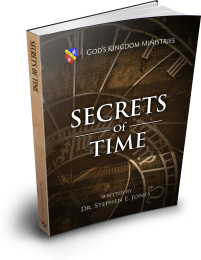
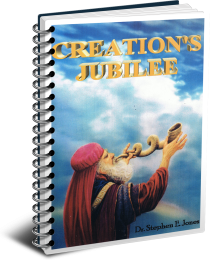


Read a variety of tracts that condense a topic into a short, single page format. These tracts can be read for free online, or physical copies can be purchased in bundles. If you are subscribed to the FFI Newsletter, you will receive new tracts when they are released.
View Full Tract ListMost Christians do not view partial obedience to God as a matter of rebellion. Neither do they view rebellion as divination or witchcraft. We tend to view our failings with sympathy, seeing that we are only human. But when we persist without repentance, there comes a point where we become disqualified as overcomers. When we substitute religious rituals (or sacrifice) for true repentance, God is not at all appeased.
In general, the refusal to hear/obey God’s voice is the main reason why believers fail to qualify as overcomers—whom the Old Testament calls the remnant (2 Kings 19:31; Ezra 9:8; Isaiah 10:20; Romans 9:27, 11:5). Of all the people known as “the church in the wilderness” (Acts 7:38 KJV), all of whom were justified by faith at Passover when they left Egypt, only Caleb and Joshua were overcomers.
Likewise, the message was given to the seven churches in Revelation 2 and 3, but “he who overcomes” (Revelation 2:11, 17, 26 etc.) is distinguished from the church as a whole. Just as the remnant of grace carried the calling of Israel while the others were cast off, so also does the same apply to the second church, that is the Pentecost church. The prophetic pattern for this is seen in the story of King Saul, who was filled with the Spirit and even prophesied (1 Samuel 10:10).
Protestant reformers a few centuries ago failed to see the contrast between church and overcomers. They viewed it as a matter of salvation itself. Calvin claimed that those who became rebellious were never saved at all, because God had not predestined them for salvation. Arminius claimed that men could lose their salvation, because salvation was based upon their ability to endure to the end.
I see it as a matter of losing one’s status as an overcomer, which requires a person to endure to the end. I do not think that rebellious believers are necessarily unbelievers. Saul sought God all (or at least most) of his life, but for some reason he was unwilling or unable to attain that which he sought. Samuel would no longer see him (1 Samuel 15:15), leaving him bereft of the word of the Lord. He ultimately sought it by consulting the witch of En-dor. 1 Samuel 28:6, 7 says,
6 When Saul inquired of the Lord, the Lord did not answer him, either by dreams or by Urim or by prophets. 7 Then Saul said to his servants, “Seek for me a woman who is a medium, that I may go to her and inquire of her.” And his servants said to him, “Behold, there is a woman who is a medium at En-dor.”
What began with “divination” (witchcraft) in 1 Samuel 15:23 reached its apex at En-dor in 1 Samuel 28:7. The problem that God viewed as witchcraft was rooted in the refusal to hear God’s voice directly and the fear that hearing God would kill them (Exodus 20:19). They knew that the baptism of fire would kill them, but they failed to realize that this was the whole idea. The fire of God does indeed kill the flesh, which Paul calls “the old man” (Colossians 3:9).
Unfortunately, men usually identify themselves with their earthly lineage going back to Adam, the original man of sin. They do not want to let go of the old man, because they do not know how to change their identity and become “the new man” (Colossians 3:10). Being untaught, they see only one man, and so they think that their Christian duty is to reform the old man so that he may be saved.
Because of this, believers tend to remain “children of the flesh” (Romans 9:8), where they depend upon their heritage or lineage back to Adam (or Israel). Hence, by having confidence in the flesh through their relationship with Adam or Israel, they remain children of the bondwoman, remaining slaves to sin, instead of casting out the bondwoman and her son (Galatians 4:30).
The result is that they become religious, thinking that sacrifice is more important than obedience. Even Saul’s encounter with the witch of En-dor was his way of seeking God in all the wrong places. Samuel had forsaken him, so even after the prophet was long dead, Saul wanted to gain an audience with him.
Saul had already shown his religious zeal by putting to death as many witches as he could find (1 Samuel 28:9). Yet in the end, he thought he needed a witch. 1 Samuel 28:11, 12 says,
11 Then the woman said, “Whom shall I bring up for you?” And he said, “Bring up Samuel for me. 12 When the woman saw Samuel, she cried out with a loud voice; and the woman spoke to Saul, saying, “Why have you deceived me? For you are Saul.
The witch believed that Saul had tricked her into exposing her as a witch, intending to put her to death. There are differing opinions as to whether this was actually Samuel or just an evil spirit pretending to be Samuel, but Scripture is clear that the word given to Saul was indeed the word of the Lord. 1 Samuel 28:19 reads,
19 “Moreover, the Lord will also give over Israel along with you into the hands of the Philistines; therefore tomorrow you and your sons will be with me. Indeed the Lord will give over the army of Israel into the hands of the Philistines!”
The next day this came to pass. Saul led the Israelite army in battle against the Philistines. He and his three sons (1 Samuel 31:8), including Jonathan, were killed (1 Samuel 31:3, 4).
As for Jonathan, he remains a tragic figure, for he loved David but remained loyal to Saul. He represents those in the church system who would very much like to be an overcomer, part of David’s company, but who remain loyal to the house of Saul. Therefore, he died with Saul in the end and was not part of David’s Kingdom.

Dr. Stephen Jones has been writing blog posts since 2005 on a variety of topics from Bible Studies to World News, and he has been writing books since 1992. Dr. Jones' most important writings came after God brought him back into the full-time ministry in 1991. It is here that all his earlier years of searching the Scriptures began to come into clear focus. He combines a knowledge of the Old and New Testaments with a personal revelation of God that began and developed during the "wilderness" period of his life, which he often refers to as God's True Bible College... Read More
We are only able to do what we do because of your support. If you feel led to support this ministry, we deeply appreciate it