Latest Posts
View the latest posts in an easy-to-read list format, with filtering options.

View the latest posts in an easy-to-read list format, with filtering options.
Multi-part posts on a particular topic, grouped together in "series" pages.
Look through our blog archive by year / month, or in a massive title list.
03/19/2026 - Peter’s first letter was addressed to some groups of ex-Israelites whose ancestors had been... Read More
03/18/2026 - 1 Peter 3:18-20 says, 18 … [Jesus] having been put to death in the flesh, but made alive in... Read More
03/17/2026 - 1 Peter 3:13-17 says, 13 Who is there to harm you if you prove zealous for what is good? 14 But ev... Read More
Read over 100 books written by Dr. Jones, available to read for free online. Several of the books have also been translated into different languages, and are also available to read for free. The only time you pay is when you purchase a physical version of a book.
View Full Book List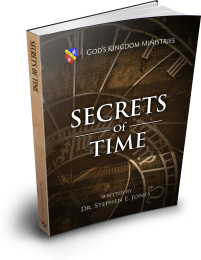
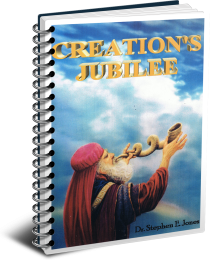

Read a variety of tracts that condense a topic into a short, single page format. These tracts can be read for free online, or physical copies can be purchased in bundles. If you are subscribed to the FFI Newsletter, you will receive new tracts when they are released.
View Full Tract ListWe were all born after the flesh by the will of man and the will (desires) of the flesh. Our natural birth is an extension of Adam, who was made a “living soul” (Genesis 2:7 KJV). This is what Paul also calls a soulish man (psukikos) in 1 Corinthians 2:14, the child of flesh, also called the “old man” (Colossians 3:9).
Paul tells us that this soulish man “does not accept the things of the Spirit of God, for they are foolishness to him.” Our soul, the old man of flesh, is incapable of accepting spiritual things, because spiritual things are discerned by our spirit, that is, our inner spiritual man (1 Corinthians 2:11).
At best, the mind of the soul revolves around the Old Covenant, which deals with fleshly things. The mind of the spirit revolves around the New Covenant, which deals with spiritual matters. Prophetic types deal with Old Covenant patterns that the soulish mind accepts. The antitypes, however, are accepted only by the spirit.
A good illustration of this is found in John 2:19-21,
19 Jesus answered them, “Destroy this temple, and in three days I will raise it up.” 20 The Jews then said, “It took forty-six years to build this temple, and will You raise it up in three days?” 21 But He was speaking of the temple of His body.
The unbelieving Jews were soulish. Their fleshly minds were well educated in the Scriptures, but their perspective was rooted in the Old Covenant. To them, there were no types that pointed to a better antitype in the future. To them, the type was the reality, and it was the best thing for them. So when Jesus spoke of “this temple,” they immediately defined His words according to their Old Covenant applications. Their soulish minds could not accept the greater truth that Jesus Himself was the antitype of the temple.
The Book of Hebrews was written to give the meat of the word to those who are spiritual. Paul scolded those believers who were still in need of the milk of the word (Hebrews 5:12). The rest of the Book of Hebrews was directed at those who were spiritual, those who had reached a higher level of spiritual maturity. For this reason, Hebrews teaches mostly about antitypes, which the spiritual man can accept.
Even genuine believers often vacillate between the soulish mindset that they received by natural seed and the spiritual mindset that came by their second begetting by the seed of the word. In Romans 7:14-25 Paul tells us that even he had difficulty as he vacillated between these two mindsets. When you became a believer, your spirit came to life and began to displace the soul as the ruler of your life. So Paul says in 1 Corinthians 8:5,
5 For those who are according to the flesh set their minds on the things of the flesh; but those who are according to the spirit, the things of the spirit.
To be fleshly means to be led by the flesh, that is, to be subservient to fleshly authority with all of its limitations. To be spiritual is to subject the flesh to the authority of the spirit. In both cases, the flesh is present. The question is whether it serves the law of God or the law of sin (Romans 7:22, 23). Herein lies the conflict, for we are no longer supposed to follow the leading of the soul, but rather to be led by our spirit, which, in turn, is filled with the Holy Spirit.
The Ark of the Covenant was built under the leadership of Moses to be the throne of God. God’s presence then rested on the Ark in the tabernacle and later in Solomon’s temple. Yet God’s glory was external, because in the days of the Old Covenant, God was still content to dwell with the people but not within them. His external presence was better than nothing, of course, but it was not the ultimate plan of God for us.
Soulish minds, even today, have accepted the belief that the Jews will build a third temple on the mount in the earthly Jerusalem and that this will be where Christ’s throne and His glory is located. They cannot see beyond this, because they have not been taught properly about types and antitypes. They have not truly comprehended the Book of Hebrews. They are still not ready for the meat of the word.
It is commonly taught that the time between the two comings of Christ is “the Age of Grace,” and that it will be followed by “the Age of Law.” Both of these terms are misleading. First, it implies that grace is only a temporary innovation. Second, by their term, “Age of Law,” they really mean “the Age of the Old Covenant.” The law itself cannot end, because it is based on love and expresses the nature of God and of Christ. God is unchanging.
We will not be returning to the Old Covenant. We are progressing toward “better” things, as the Book of Hebrews tells us. God will not reverse course and go back to that which is worse—that is, to fleshly worship, external temples, or an Aaronic priesthood.
We now have the glory of God within our hearts, within our Most Holy Place. We are now the temples of God (1 Corinthians 3:16). In 2 Corinthians 4:6, 7 Paul says,
6 For God, who said, “Light shall shine out of darkness,” is the One who has shone in our hearts to give the Light of the knowledge of the glory of God in the face of Christ. 7 But we have this treasure in earthen vessels, so that the surpassing greatness of the power will be of God and not from ourselves.
His glory still indwells human flesh, for “we have this treasure in earthen vessels.” Yet His glory in us is veiled by our flesh, even as the glory that was in Christ was also veiled by His flesh (Hebrews 10:20). His flesh hid that glory from the world except for a brief moment on the Mount of Transfiguration (Matthew 17:2). That same glory is now hidden behind our flesh as well until the unveiling (apokalupsis) of the sons of God (Romans 8:19).
This unveiling will occur with the fulfillment of the feast of Tabernacles.

Dr. Stephen Jones has been writing blog posts since 2005 on a variety of topics from Bible Studies to World News, and he has been writing books since 1992. Dr. Jones' most important writings came after God brought him back into the full-time ministry in 1991. It is here that all his earlier years of searching the Scriptures began to come into clear focus. He combines a knowledge of the Old and New Testaments with a personal revelation of God that began and developed during the "wilderness" period of his life, which he often refers to as God's True Bible College... Read More
We are only able to do what we do because of your support. If you feel led to support this ministry, we deeply appreciate it