Latest Posts
View the latest posts in an easy-to-read list format, with filtering options.

View the latest posts in an easy-to-read list format, with filtering options.
Multi-part posts on a particular topic, grouped together in "series" pages.
Look through our blog archive by year / month, or in a massive title list.
03/19/2026 - Peter’s first letter was addressed to some groups of ex-Israelites whose ancestors had been... Read More
03/18/2026 - 1 Peter 3:18-20 says, 18 … [Jesus] having been put to death in the flesh, but made alive in... Read More
03/17/2026 - 1 Peter 3:13-17 says, 13 Who is there to harm you if you prove zealous for what is good? 14 But ev... Read More
Read over 100 books written by Dr. Jones, available to read for free online. Several of the books have also been translated into different languages, and are also available to read for free. The only time you pay is when you purchase a physical version of a book.
View Full Book List
Read a variety of tracts that condense a topic into a short, single page format. These tracts can be read for free online, or physical copies can be purchased in bundles. If you are subscribed to the FFI Newsletter, you will receive new tracts when they are released.
View Full Tract ListGod justifies His judgment upon Moab and Ammon in Zephaniah 2:10, 11,
10 This they will have in return for their pride, because they have taunted and become arrogant against the people of the Lord of hosts. 11 The Lord will be terrifying to them, for He will starve all the gods of the earth; and all the coastlands of the nations will bow down to Him, everyone from his own place.
It is interesting that God makes no mention of the idolatry of Moab and Ammon, nor does He even condemn them specifically for worshiping Molech (Leviticus 18:21) and Milcom (1 Kings 11:5). Instead, they are condemned for pride and arrogance, demonstrated primarily by their joy when Israel and Judah were judged by God.
The Moabites and Ammonites induced the Israelites to forsake the God of Israel and to worship Molech and Milcom. Hence, they must bear some of the blame for God’s judgment on Israel and Judah. Yet in their arrogance, they thought that they were immune to Yahweh’s judgment. In those days it was commonly believed that the gods were local deities, each demanding worship from those who lived in the territories that those gods claimed as their own.
The primary lesson here is that when God brings judgment on a man or nation, others should not rejoice over their calamity. They should remain sober, remembering that God is impartial in His judgments (Deuteronomy 16:19). To rejoice when God judges others suggests that they assume a level of immunity from the same judgment. Yet “all have sinned” (Romans 3:23), and it is only because of God’s grace that we ourselves escape similar judgment.
In Leviticus 18:24-28 Moses warned Israel,
24 Do not defile yourselves by any of these things; for by all these things the nations which I am casting out before you have become defiled. 25 For the land has become defiled, therefore I have brought its punishment upon it, so the land has spewed out its inhabitants. 26 But as for you, you are to keep My statutes and My judgments and shall not do any of these abominations, neither the native nor the alien who sojourns among you 27 (for the men of the land who have been before you have done all these abominations, and the land has become defiled); 28 so that the land will not spew you out, should you defile it, as it has spewed out the nation which has been before you.
It is important to note that God was not partial toward Israel. Neither did God give Israel a pass to sin with impunity. While many of them may have believed that God would spare them on account of their genealogical connection to Abraham, such a view was disproven every time God brought them into captivity—and ultimately exiled them from the land. In fact, God held them more responsible than the Canaanites, because the laws of God had been revealed to them.
Zephaniah 2:12 gives a warning to Ethiopia, located south of Egypt:
12 “You also, O Ethiopians, will be slain by My sword.”
This brief word of judgment was a supplement to the word given to the prophet in Isaiah 18:1-7 a century earlier. Isaiah 18:1, 2 says,
1 Alas, oh land of whirring wings, which lies beyond the rivers of Cush [Ethiopia], 2 … whose land the rivers divide.
Ethiopia, under king Piye, invaded Egypt in 747 B.C. The Ethiopian Dynasty, known as the 25th Dynasty, ruled Egypt until 656 B.C., when the Assyrians finally defeated them and pushed them out of Egypt. Zephaniah and Jeremiah began to prophesy in Judah about 20 years later. We should note also that Isaiah 18:7, 8 speak of a later time when Ethiopia would worship the God of Israel.
7 At that time a gift of homage will be brought to the Lord of hosts from a people tall and smooth, even from a people feared far and wide, a powerful and oppressive nation, whose land the rivers divide—to the place of the name of the Lord of hosts, even Mount Zion.
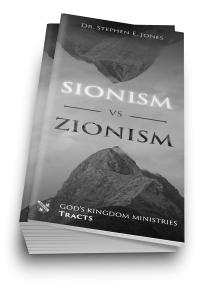
This was not fulfilled during the time of the Old Covenant, of course; hence, it must yet be fulfilled in a New Covenant manner. As I have shown in other writings, Mount Zion was the seat of Old Covenant government in the earthly Jerusalem, whereas now Mount Sion is the new seat of government for the heavenly Jerusalem (Hebrews 12:22 KJV). Sion is Mount Hermon (Deuteronomy 4:48) north of Israel. It is the place of Jesus’ transfiguration.
https://godskingdom.org/studies/tracts/sionism-vs-zionism/
The repentance of Ethiopia will no doubt be part of the general prophecy in Zephaniah 2:11, which says, “He will starve all the gods of the earth.” In other words, no one will give offerings of meat and drink to false gods, because all nations will recognize the one true God.
Although God spared Nineveh, the capital of Assyria, after the king and the people repented at the preaching of Jonah, they soon reverted to their former manner of worship. It is hard to change a nation’s religious culture without teaching them the laws of God over a period of generations.
So Zephaniah 2:13-15 gives a warning to Assyria,
13 And He will stretch out His hand against the north and destroy Assyria, and He will make Nineveh a desolation, parched like the wilderness. 14 Flocks will lie down in her midst, all beasts which range in herds; both the pelican and the hedgehog will lodge in the tops of her pillars. Birds will sing in the window, desolation will be on the threshold, for He has laid bare the cedar work. 15 This is the exultant city which dwells securely, who says in her heart, “I am, and there is no one beside me.” How she has become a desolation, a resting place for beasts! Everyone who passes by her will hiss and wave his hand in contempt.
The Babylonians revolted against the rule of Assyria. They allied with the Medes and, after a three-month siege, destroyed Nineveh in 612 B.C. Assyria had begun to weaken in 627 B.C. after the death of King Ashurbanipal. By this time also, both Zephaniah and Jeremiah had begun to prophesy the downfall of Judah.
The Medes and Babylonians razed Nineveh to the ground. Assyrian survivors regrouped at Harran and later at Carchemish, where they made an alliance with Egypt (Jeremiah 46:2). Their final defeat at Carchemish came in 609 B.C. Nineveh itself never recovered — it was buried in ruins, becoming “a resting place for beasts,” until rediscovered in the 19th century.
The great library of Nineveh was excavated from 1900-1930. The tablets that were recovered showed that the exiled Israelites had been resettled in the land of Gamir, named for Israel’s King Gomri (later written as Omri). After Assyria fell to the Babylonians, many of the exiled Israelites immigrated north through the Caucasus Mountains and into Europe, where they became known to historians generally as Caucasians and more specifically as Gamiri, or Khumri (Celts).
Because they no longer were known as Israelites, their original identity as Israelites was hidden, and they became the so-called “lost tribes of Israel.”
See also my book: Who is an Israelite?

Dr. Stephen Jones has been writing blog posts since 2005 on a variety of topics from Bible Studies to World News, and he has been writing books since 1992. Dr. Jones' most important writings came after God brought him back into the full-time ministry in 1991. It is here that all his earlier years of searching the Scriptures began to come into clear focus. He combines a knowledge of the Old and New Testaments with a personal revelation of God that began and developed during the "wilderness" period of his life, which he often refers to as God's True Bible College... Read More
We are only able to do what we do because of your support. If you feel led to support this ministry, we deeply appreciate it