Latest Posts
View the latest posts in an easy-to-read list format, with filtering options.
View the latest posts in an easy-to-read list format, with filtering options.
Multi-part posts on a particular topic, grouped together in "series" pages.
Look through our blog archive by year / month, or in a massive title list.

02/04/2026 - The FFI Issue for February, The Lamentations of Jeremiah, part 8, is now live for online viewing!... Read More
02/04/2026 - Ecclesiastes 11:7, 8 says, 7 The light is pleasant, and it is good for the eyes to see the sun. 8... Read More
02/03/2026 - Ecclesiastes 11:5 says, 5 Just as you do not know the path of the wind and how bones are formed in... Read More
Read over 100 books written by Dr. Jones, available to read for free online. Several of the books have also been translated into different languages, and are also available to read for free. The only time you pay is when you purchase a physical version of a book.
View Full Book List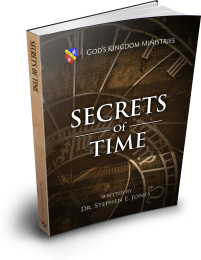
Read a variety of tracts that condense a topic into a short, single page format. These tracts can be read for free online, or physical copies can be purchased in bundles. If you are subscribed to the FFI Newsletter, you will receive new tracts when they are released.
View Full Tract ListThe church in Colossae was being threatened by angel worship, spiritual intermediaries other than Christ, Greek philosophical speculation, and legalism from Judaism. Paul responds with one message: You do not need anything in addition to Christ, because Christ is everything. The gospel provides the full truth, and you need not look for more hidden truth in Gnosticism, Greek religion, nor even Judaism.
Colossians 1:15-20 is regarded by scholars to be an early church “Christ Hymn” that was commonly sung as part of their worship. It falls naturally into two stanzas. Together, they form a carefully constructed Hebrew chiasm (or parallelism) as follows:
(Stanza 1: Christ and Creation)
15 He is the image of the invisible God,
The firstborn of all creation.
16 For by Him all things were created,
Both in the heavens and on earth,
Visible and invisible,
Whether thrones or dominions or rulers or authorities—
All things have been created through Him and for Him.
17 He is before all things,
And in Him all things hold together.
(Stanza 2: Christ and Redemption)
18 He is also head of the body, the church,
And He is the beginning,
The firstborn from the dead,
So that He Himself will come to have first place in everything.
19 For it was the Father’s good pleasure for all the fulness to dwell in Him,
20 and through Him to reconcile all things to Himself,
having made peace through the blood of His cross;
through Him, I say, whether things on earth or things in heaven.
Stanza 1 is one line longer than Stanza 2, but scholars say that this is not accidental. Stanza 1 is layered according to various structures of governance: Heavens / earth; Visible / invisible; Thrones / dominions / rulers / authorities. This produces extra lines by deliberate expansion. Some scholars believe that Paul actually expanded the hymn (line 6) to counter the problem of Gnostic angel cosmology (other intermediaries).
By contrast, Stanza 2 moves rapidly toward a single climactic act: Reconciliation, Peace, Blood of the cross.
Together, the two stanzas are written in a typical Hebrew chiasm (or parallelism), having as the central feature (in the middle) verse 17: “He is before all things, and in Him all things hold together.” This is the theological center of the hymn and the hinge on which everything turns. Christ is pre-existent and is the glue that holds all things together.
Stanza 1 answers the question: Who is Christ in relation to the universe?
Stanza 2 answers the question: What is Christ doing in the universe? (What is His Plan?)
The chiasmic structure teaches that:
1. The Creator is the Redeemer
2. The Sustainer is the Reconciler
3. The One who made all things is the One who restores all things
4. Christ’s position gives Him the power to reconcile all that He has created
This is a hymn of Universal Creation and of Universal Reconciliation, taking us from the beginning to the end of Universal History. He created all things (verse 16), He sustains all things (verse 17), and He reconciles all things (verse 20). The devil does not win in the end; Christ wins and takes back everything (ta panta, “The All”) by the power of His blood which paid the debt for the sin of the whole world (1 John 2:2).
In Paul’s comment on Psalm 8, he repeats this assertion in Ephesians 1:22, 23,
22 And He put all things in subjection under His feet, and gave Him as head over all things to the church, 23 which is His body, the fullness of Him who fills all in all.
Again, Paul tells us the meaning of Psalm 8:6, telling us in 1 Corinthians 15:27, 28,
27 For “He has put all things in subjection under His feet.” But when He says, “All things are put in subjection,” it is evident that He is excepted who put all things in subjection to Him. 28 When all things are subjected to Him, then the Son Himself also will be subjected to the One who subjected all things to Him, so that God may be all in all.
In the end, the only One not subjected to Christ is the Father Himself. The present chaos and disunity in the universe will end when the divine plan is complete and when creation as a whole fulfills its purpose and destiny. Hebrews 2:8 again states,
8 … For in subjecting all things [ta panta, “The All”] to Him, He left nothing that is not subject to Him. But now we do not yet see all things subjected to Him.
Paul sums up the divine plan again in Romans 11:36,
36 For from Him and through Him and to Him are all things. To Him be the glory forever. Amen.

Dr. Stephen Jones has been writing blog posts since 2005 on a variety of topics from Bible Studies to World News, and he has been writing books since 1992. Dr. Jones' most important writings came after God brought him back into the full-time ministry in 1991. It is here that all his earlier years of searching the Scriptures began to come into clear focus. He combines a knowledge of the Old and New Testaments with a personal revelation of God that began and developed during the "wilderness" period of his life, which he often refers to as God's True Bible College... Read More
We are only able to do what we do because of your support. If you feel led to support this ministry, we deeply appreciate it