Latest Posts
View the latest posts in an easy-to-read list format, with filtering options.
View the latest posts in an easy-to-read list format, with filtering options.
Multi-part posts on a particular topic, grouped together in "series" pages.
Look through our blog archive by year / month, or in a massive title list.
03/18/2026 - 1 Peter 3:18-20 says, 18 … [Jesus] having been put to death in the flesh, but made alive in... Read More
03/17/2026 - 1 Peter 3:13-17 says, 13 Who is there to harm you if you prove zealous for what is good? 14 But ev... Read More
03/16/2026 - The Prayer Principle Why does Peter tell husbands to honor their wives so that their prayers will... Read More
Read over 100 books written by Dr. Jones, available to read for free online. Several of the books have also been translated into different languages, and are also available to read for free. The only time you pay is when you purchase a physical version of a book.
View Full Book List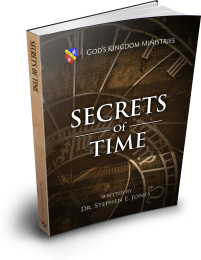

Read a variety of tracts that condense a topic into a short, single page format. These tracts can be read for free online, or physical copies can be purchased in bundles. If you are subscribed to the FFI Newsletter, you will receive new tracts when they are released.
View Full Tract List1 Peter 3:18-20 says,
18 … [Jesus] having been put to death in the flesh, but made alive in the spirit; 19 in which also He went and made proclamation to the spirits now in prison, 20 who once were disobedient, when the patience of God kept waiting in the days of Noah, during the construction of the ark, in which a few, that is, eight persons, were brought safely through the water.
This passage is one of the more controversial passages in the New Testament. It is difficult to understand, because Peter makes statements without giving much detail. Hence, we must piece it together with other passages of Scripture in order to get a clearer picture. First we should take note of 2 Peter 2:4, 5, where the apostle again references Noah’s flood:
4 For if God did not spare angels when they sinned, but cast them into hell [“Tartarus”] and committed them to pits of darkness, reserved for judgment 5 and did not spare the ancient world, but preserved Noah, a preacher of righteousness, with seven others, when He brought a flood upon the world of the ungodly.
The main detail added here is that these “spirits now in prison” were “angels” who sinned, and that God’s judgment in the time of Noah “cast them into hell.”
The word “hell” in 2 Peter 2:4 is not the usual hades, nor is it even gehenna. It is a reference to Tartarus, which appears to be a special “prison” reserved for fallen angels, rather than for disobedient humanity.
Hades, the grave, is for humanity; gehenna (called the valley of Ben-hinnom in Jeremiah 19:2) is for the earthly Jerusalem. So Jeremiah cast the earthen jar into gehenna and smashed it, making gehenna symbolic and prophetic of the place of judgment and destruction for the Old Jerusalem. Paul refers to this event as the casting out of the “bondwoman” (Galatians 4:30), who represents the Old Covenant and the Old Jerusalem. These must be cast out in order to establish the New Covenant and the New Jerusalem.
Tartarus is different, and this is the only biblical reference we have that mentions it. Peter uses the word tartarōsas, a verb that means “having cast into Tartarus.” Many translators lump the three words together as “hell” without distinguishing between them. This only serves to confuse or mislead those who read the Bible without studying the original language.
The noun Τάρταρος(“Tartarus”) comes from Greek cosmology. In classical Greek thought Tartarus was the deepest part of the underworld, a place where rebellious gods (Titans) were imprisoned. Judgment was delayed but certain. However, we cannot take the Greek usage of the word as absolute truth, because they had defined the word according to their religious views, which had evolved (and degenerated) over the centuries.
The same is true in regard to Hades. Their concept of Hades, with Pluto guarding its gates and the necessity of crossing the River Eridanus, is not biblical. The Hades of the New Testament must be defined in terms of the Hebrew word Sheol. The Septuagint translators chose to translate Sheol as Hades, because both represented the place of the dead, but each society (and religion) defined that place in a different way.
Peter assigns the disobedient angels (Genesis 6:1-4) to Tartarus, not to Hades, nor even to the abyss (ἄβυσσος), and this truth was still partially retained in Greek cosmology. The Greeks called them Titans and had created a mythology around them that does not necessarily reflect biblical truth. Nonetheless, the Jews, Greeks, and early Christians all believed that Tartarus was a (temporary) prison, where the disobedient spirits were bound, awaiting the actual judgment at the end of the age.
Before the church fathers, Jewish literature had already developed the idea that the angels who sinned were bound, cast into dark pits, and were awaiting judgment. This is explicit in 1 Enoch 10:4-6,
“And again the Lord said to Raphael: ‘Bind Azazel hand and foot, and cast him into the darkness: and make an opening in the desert, which is in Dudael, and cast him therein.
And place upon him rough and jagged rocks, and cover him with darkness, and let him abide there for ever, and cover his face that he may not see light. And on the day of the great judgment he shall be cast into the fire’.”
Again, we read in 1 Enoch 10:11-13,
“And the Lord said unto Michael: ‘Go, bind Semjaza and his associates… Bind them fast for seventy generations in the valleys of the earth, till the day of their judgment and of their consummation… In those days they shall be led off to the abyss of fire…’”
The early church largely inherits this framework rather than inventing a new one. Jude mentions Enoch in Jude 14, telling us also in verse 6,
6 And angels who did not keep their own domain, but abandoned their proper abode, He has kept in eternal bonds under darkness for the judgment of the great day.
Clement of Alexandria (c. 150–215), in his Stromata, Book VI, wrote,
“The angels that transgressed… have been imprisoned in the lower regions, and are kept in bonds.”
Justin Martyr (c. 100–165), in his Second Apology, chapter 5, wrote,
“God… committed them to chains under darkness, to be kept for judgment… but permitted them for a time to exercise their power.”
Irenaeus (c. 130–202), in his Against Heresies, Book IV, chapter 36, wrote,
“The angels who transgressed… are in confinement, and are reserved for judgment.”
Tertullian (c. 160–220), the Christian Roman lawyer, wrote in his Apology, chapter 22,
“These angels… who fell from God… are reserved for punishment; and their offspring the demons… wander over the whole earth.”
Tertullian is unique in that he believed that demons were “their offspring.” (I personally question that belief.) Again, he wrote in On the Apparel of Women, 1.2,
“Those angels who… fell into sin… were condemned by God to a prison of darkness.”
Lactantius (c. 250–325), Constantine’s tutor, wrote in Divine Institutes, Book II, chapter 15,
“Those angels who fell… are bound in chains of darkness, and are kept for punishment.”
Early church writers were consistent in their belief about the imprisonment of the angels who sinned in Genesis 6:1-4. While they may have been influenced by the book of Enoch, there is no doubt that Peter’s confirmation settled the matter in their minds. They did not always use the term Tartarus, but they all subscribed to the belief that the angels that sinned had been cast into a pit or prison of darkness to await their final judgment at the great White Throne.
1 Peter 3:19 says,
19 in which also He went and made proclamation (ekēruxen) to the spirits now in prison.
These spirits had been imprisoned at the time of Noah’s flood. Jesus did not evangelize (euangelizō) them but made a proclamation (ekēruxen) to them. That is, He informed them of something. He stated a fact. The scene pictures a Roman Triumph, where an emperor, having conquered an enemy, marched in a victory procession, displaying his prisoners of war—kings, leaders, or generals taken captive. It was done to proclaim victory in a very public manner.
It was also a statement of sovereignty, because it did not ask for the consent of the captives. Their rebellion had led to their defeat and imprisonment to await trial at the end of days. The cross was not only a sacrifice—it was also a proclamation of triumph to the unseen realm.
Paul pictures this too in Colossians 2:15,
15 He disarmed the rulers and authorities and made a public display of them…
Again, Paul writes in Ephesians 4:8,
8 Therefore it says, “When He ascended on high, He led captive a host of captives, and He gave gifts to men.
This is a quotation from Psalm 68:18,
18 You have ascended on high, You have led captive Your captives; You have received gifts [tribute] among men, even among the rebellious also, that the Lord God may dwell there.
Psalm 68:18 says that God received the gifts (as tribute from the rebellious ones). But Paul tells us that God “gave gifts to men,” which he lists as the five-fold ministry (Ephesians 4:11). It was customary in those days for the defeated ones to pay tribute to the conquering king. But it was also customary for the king to redistribute the wealth to his soldiers—which, Paul says, are those who are called with various ministries, designed to teach the laws of God to the conquered ones. The goal is stated in Ephesians 4:12, 13,
12 for the equipping of the saints for the work of service, to the building up of the body of Christ; 13 until we all attain to the unity of the faith, and of the knowledge of the Son of God, to a mature man, to the measure of the stature which belongs to the fullness of Christ.
The rebellious are not just defeated—they are brought under God’s rule so that He may dwell among them. This pictures the conquering nation as it incorporates the conquered nation and allows the citizens to own or purchase land in the new territory.
This is a process that leads to the restoration of all things, putting all things under the feet of Christ (1 Corinthians 15:27).
The underlying question, then, is this: Are these captives disobedient humans or fallen angels?

Dr. Stephen Jones has been writing blog posts since 2005 on a variety of topics from Bible Studies to World News, and he has been writing books since 1992. Dr. Jones' most important writings came after God brought him back into the full-time ministry in 1991. It is here that all his earlier years of searching the Scriptures began to come into clear focus. He combines a knowledge of the Old and New Testaments with a personal revelation of God that began and developed during the "wilderness" period of his life, which he often refers to as God's True Bible College... Read More
We are only able to do what we do because of your support. If you feel led to support this ministry, we deeply appreciate it