Latest Posts
View the latest posts in an easy-to-read list format, with filtering options.
View the latest posts in an easy-to-read list format, with filtering options.
Multi-part posts on a particular topic, grouped together in "series" pages.
Look through our blog archive by year / month, or in a massive title list.

07/16/2026 - I will be out of town for the next week. I do not anticipate writing any weblogs during that time.... Read More

07/16/2026 - Ancient Israel turned from its calling as the Kingdom of God to adopting the religious and governm... Read More
07/15/2026 - Some years ago, I studied the Departments of Kingdom Government that set forth a basic structure o... Read More
Read over 100 books written by Dr. Jones, available to read for free online. Several of the books have also been translated into different languages, and are also available to read for free. The only time you pay is when you purchase a physical version of a book.
View Full Book List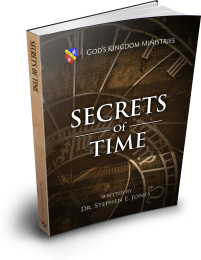
Read a variety of tracts that condense a topic into a short, single page format. These tracts can be read for free online, or physical copies can be purchased in bundles. If you are subscribed to the FFI Newsletter, you will receive new tracts when they are released.
View Full Tract ListThe final section forms the climax of Peter's epistle. He has exposed false teachers (chapter 2), answered the mockers (3:1–9), and now concludes by showing how believers should live in light of God's coming intervention in history.
2 Peter 3:10 says,
10 But the day of the Lord will come like a thief, in which the heavens will pass away with a roar [rhoizedon] and the elements [stoicheia] will be destroyed with intense heat, and the earth and its works will be burned up.
“The Day of the Lord” is an expression that has a long Old Testament history, referring to the end of the age when God judges the nations as a whole. Isaiah 13:6, 9 says,
6 Wail, for the day of the Lord is near! It will come as destruction from the Almighty. 9 Behold, the day of the Lord is coming, cruel, with fury and burning anger, to make the land [ancient territory of Israel] a desolation; and He will exterminate the sinners from it.
See also Joel 2:1, 31; Amos 5:18-20; and Zephaniah 1:14-18. It refers to a decisive divine intervention in history, often involving judgment followed by restoration.
Peter emphasizes its unexpectedness, saying, “like a thief.” Jesus used the same imagery (Matthew 24:43–44), as did Paul (1 Thessalonians 5:2). The imagery is not of a silent burglar but of a robber chief whose bandits would often swoop down upon a village before dawn, burn down houses, kill those who might defend their homes, and plunder it before riding back into the night.
What a thief and his band might do to a village, God will do on a broader scale.
The Greek word translated “roar” (rhoizedon) describes the rushing sound of something moving violently through the air. Peter pictures a cosmic upheaval beyond anything mankind has experienced.
The Greek word for “elements” is stoicheia. It was not a scientific word and does not point to the Periodic Table of Elements. In the first century it had a philosophical meaning: basic principles, elemental forces, or rudimentary things. Because Peter has already contrasted the old world before the flood with the present world, he appears to be describing the dissolution of the basic structures and institutions of the present world order in preparation for a new one.
The word stoicheion originally referred to things arranged in a row or sequence. From this developed several related meanings: letters of the alphabet, the ABC's of (elementary) education, and basic principles, rudiments, and building blocks of society in general. In Greek educational settings, children learned their letters in sequence. Thus stoicheia came to mean the “ABC's” or elementary building blocks of learning.
The root of stoicheia is stoichos, meaning a row, a line, something arranged in order. The basic idea is things standing in a series, such as a row of soldiers. Because letters are arranged in a fixed sequence (alpha, beta, gamma, delta... etc.), the Greeks began calling the letters themselves stoicheia. In much the same way, we speak of “learning your ABC's,” the Greeks could speak of learning one's stoicheia.
Norman Wentworth DeWitt (1876–1958), a professor of Classics at the Victoria College, wrote a book entitled, St. Paul and Epicurus. The book was first published in 1954 by the University of Minnesota Press. DeWitt was one of the foremost English-speaking scholars of Epicureanism in the mid-20th century.
The argument made in Saint Paul and Epicurus is that ancient teachers often referred to the alphabet not by "A-B-C" but by the middle sequence, L-M-N, much as we might casually say “the ABC's.” This is not because the Greek letters, lambda-mu-nu, were the first letters of the alphabet, but because a recognizable sequence could stand for the entire alphabet.
Greek philosophers then extended the idea. Among philosophers such as Plato and Aristotle, stoicheia commonly meant letters of the alphabet, geometrical components, and physical elements (earth, air, fire, water). They were thought to be the fundamental units from which larger structures were formed. So the transition from “letters” to “LMN’s” to “elements” had already occurred several centuries before Christ.
Epicurus himself developed what is called the atomic theory. To him, an atom was the smallest particle that could not be subdivided further. Hence, “elements” had a quasi-scientific meaning, although this was thought of in terms of earth, air, fire, and water, rather than as oxygen, nitrogen, or argon.
Later Greek philosophers broadened the term even further. The stoicheia became not merely physical substances but the fundamental principles governing the cosmos. So depending on the context, stoicheia could refer to physical elements, heavenly bodies lined up in a heavenly array, astral powers, cosmic forces, and elementary religious systems. This explains why Paul's use is often difficult to translate.
When Paul wrote Galatians and Colossians, and when Peter wrote 2 Peter, the word already carried a range of meanings.
For Peter's readers, the “ABC” meaning was certainly known, but the “physical elements,” rooted in the atomic theory, was equally well established. Consequently, when Peter writes, “the stoicheia will be destroyed with intense heat” (2 Peter 3:10), his readers would naturally think first of the constituent parts of the present creation.
However, because the word had a long history of broader usage, some interpreters have wondered whether Peter intended more than merely material substances. Certainly, the Day of the Lord will involve the destruction of societal, institutional, and educational building blocks.
Personally, I believe Peter's context should control our interpretation. Notice his sequence: the ancient world perished by water (3:6), the present heavens and earth are reserved for fire (3:7), and the new heavens and a new earth will follow (3:13).
Peter's concern is not chemistry but world-orders. This is why stoicheia here probably refers to the fundamental structures of the present age rather than merely atoms or molecules.
2 Peter 3:11-13 says,
11 Since all these things are to be destroyed in this way, what sort of people ought you to be in holy conduct and godliness, 12 looking for and hastening the coming of the day of God, because of which the heavens will be destroyed by burning, and the elements [stoicheia] will melt with intense heat! 13 But according to His promise, we are looking for new heavens and a new earth, in which righteousness dwells.
Peter instructs believers not to be too attached to the present earth or even the heavens—the constellations and stars, as interpreted by Greek mythology. Isaiah looked for new heavens and a new earth (Isaiah 65:17; 66:22), even as Abraham sought “a better country” (Hebrews 11:16), a heavenly city (Hebrews 11:10), and a spiritual temple (Ephesians 2:20-22), “in which righteousness dwells.”
Isaiah 1:26 prophesies of the coming heavenly city, saying,
26 Then I will restore your judges as at the first, and your counselors as at the beginning; after that you will be called the city of righteousness, a faithful city.
This, Peter tells us is “according to the promise.” Hence, it is not achievable through the Old Covenant, which requires the will of man to fulfill his vow (Exodus 19:8). It is achievable only through the New Covenant, which comes through the promise of God and His ability alone to fulfill His word.
2 Peter 3:14, 15 says,
14 Therefore, beloved, since you look for these things, be diligent to be found by Him in peace, spotless and blameless, 15 and regard the patience of our Lord as salvation; just as also our beloved brother Paul, according to the wisdom given him, wrote to you, 16 as also in all his letters, speaking in them of these things, in which are some things hard to understand, which the untaught and unstable distort, as they do also the rest of the Scriptures, to their own destruction.
I have shown how Peter and Paul were in agreement, especially in regard to the two covenants, the two Jerusalems, the two heavens and the two earths. This is remarkable because critics often attempt to place Peter and Paul in opposition. Their executions in Rome, according to the history of Eusebius, drew near. Both wrote final letters. Here Peter acknowledges that Paul’s letters were placed alongside of “the rest of the Scriptures.” This is one of the clearest New Testament testimonies to the authority of Paul's epistles.
Years earlier, Paul had rebuked Peter for hypocrisy (Galatians 2:11-13) at a time when Peter was yet afraid of those Jews who were partial and discriminatory, thinking of gentile believers as if they were yet unclean on account of their genealogy.
No doubt many Jews—even Christian believers—had difficulty letting go of Old Covenant religious thinking. The earthly Jerusalem, with its unlawful traditions still had a grip on their soulish minds, and Peter too had been afraid to confront them with the nature of an impartial God of heaven. But in the end, Peter agreed with Paul and called him “our beloved brother.”
2 Peter 3:17, 18 closes his letter this way:
17 You, therefore, beloved, knowing this beforehand, be on your guard so that you are not carried away by the error of unprincipled men and fall from your own steadfastness, 18 but grow in the grace and knowledge of our Lord and Savior Jesus Christ. To Him be the glory, both now and to the day of eternity [eis hēmeran aiōnos, “the day of the age”]. Amen.
Throughout the epistle Peter emphasizes true knowledge (epignosis) as the antidote to deception. Growth requires both grace without legalism and knowledge without pride. True knowledge is to know the mind of Christ and His intent, not just the letter of the law. This is to be acquired in view of the coming “day of the age.” This expression is unique; no other biblical author uses it. No doubt it refers to the day of the Lord and the consummation of the age, when the old order of creation is replaced by the new heavens and the new earth.
The entire letter then ends where it began—with Jesus Christ.

Dr. Stephen Jones has been writing blog posts since 2005 on a variety of topics from Bible Studies to World News, and he has been writing books since 1992. Dr. Jones' most important writings came after God brought him back into the full-time ministry in 1991. It is here that all his earlier years of searching the Scriptures began to come into clear focus. He combines a knowledge of the Old and New Testaments with a personal revelation of God that began and developed during the "wilderness" period of his life, which he often refers to as God's True Bible College... Read More
We are only able to do what we do because of your support. If you feel led to support this ministry, we deeply appreciate it