Latest Posts
View the latest posts in an easy-to-read list format, with filtering options.
View the latest posts in an easy-to-read list format, with filtering options.
Multi-part posts on a particular topic, grouped together in "series" pages.
Look through our blog archive by year / month, or in a massive title list.
10/06/2026 - Having exposed the political nature of the Little Horn’s religious beast empire, we can more... Read More
10/05/2026 - When the Israelites wanted flesh to eat, God gave them their desire but it made them sick. Psalm 1... Read More

10/02/2026 - Estonia, one of Europe’s tiny Baltic nations, is being applauded for banning all grain shipm... Read More
Read over 100 books written by Dr. Jones, available to read for free online. Several of the books have also been translated into different languages, and are also available to read for free. The only time you pay is when you purchase a physical version of a book.
View Full Book List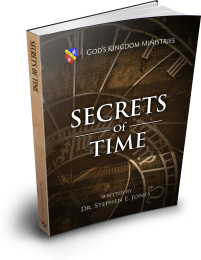

Read a variety of tracts that condense a topic into a short, single page format. These tracts can be read for free online, or physical copies can be purchased in bundles. If you are subscribed to the FFI Newsletter, you will receive new tracts when they are released.
View Full Tract List
This 128-page book outlines the four main features necessary to have a Kingdom, finishing with a lengthy section on adopting a Kingdom worldview.
Category - General

Religious philosophy seeks truth by the power of the soul (mind). Biblical truth rests upon a divine revelation of law (or “natural law”). The Bible recognizes that mortal men are limited in their ability to enlighten themselves through study. Reason is good and necessary but yet inadequate; so Scripture sets forth divine revelation to overcome man’s disability.
God’s law defines His nature and sets the standard of righteousness that governs the universe and was intended to govern man’s relationships as well. God’s law is summarized in two principles: to love God with all of your heart (Deut. 6:5) and to love your neighbor as yourself (Lev. 19:18).
Because God is love, each individual law defines a distinct manifestation of love. Any law that appears to contradict love is due to misunderstanding (or mistranslation) and requires prayer for further revelation to overcome men’s blindness.
True order in the cosmos is based upon love; secular chaos is based on selfishness and enforced by fear. Both love and fear bind people together in unity, but one brings unity through freedom, whereas the other brings unity through slavery.
Which kind of world would you prefer? Well, of course, the answer may depend on whether you are the slave or the slave master. The point is that the Bible itself has been the source of love-based civilization and of true liberty and equality, even though the Bible has often been misunderstood and misinterpreted in order to justify slavery.
The Reformation changed everything as the Bible began to be read and studied to learn the laws of God and the form of government that God had instituted among men. The Bible soon standardized the meaning of words in various dialects of Europe. People used the Bible as their text book to become literate once again. Literacy opened up a whole new world to the common people.
Then Constantinople fell in 1453, just a year after the Gutenberg Bible was printed in Germany. Thousands of Greek refugees, among them learned churchmen from the Eastern church, brought thousands of Greek manuscripts and classical literature into Europe.
Hence, the Reformation prepared the way for the so-called “Enlightenment,” the secular thrust of this new literacy. The Reformation had already begun as early as the late 1200’s, but it was persecuted and hindered until the printing press was adopted in the 1450’s. Then men were able to read what they wished, both religious and secular material. The common people were mostly influenced by the Bible; the wealthy were more influenced by the “Enlightenment.”
The Dark Ages were called the Age of Faith—blind faith, because the Church kept the people ignorant of the Scriptures. Hence, the people believed, but did not know. The Age of Faith was replaced by two branches of thought—one religious and the other secular. The religious branch begat Christian government; the secular branch begat secular government.
Those who studied Scripture had a head start on the Socialist revolutionaries.
Among those of the secular “Enlightenment,” faith was replaced by the Age of Reason, where men had great confidence in reason to discover ultimate truth. This was an outgrowth of Greek philosophy, which believed that the mind (soul) was spiritual.
In spite of the huge surge in scientific and technological knowledge, the Age of Reason gave way to an Age of Pessimism in the 20th century. The sheer volume of new knowledge made it clear that the goal of obtaining useful knowledge was unattainable even to the best reasoning mind. This disillusionment has opened up a new door to Eastern philosophy, which sets forth the idea that human intellect is not a source of ultimate truth but a source of ignorance which must be silenced and emptied.
Buddhist monks have developed a rather fatalistic philosophy of a life of suffering, which they seek to escape through meditation and by silencing both tongue and thought. Such philosophy prevented the development of great music, because salvation and heaven was a state of silence. There was no religious motivation to create great harmonious music, such as was heard when the Bible opened up the hearts and minds of inspired musicians in Europe. The Christian nations, for all of their shortcomings, believed that a good God had created all things orderly and harmoniously and that the final goal of creation was to reconcile and restore all things to that place of harmony.
But in the East, the greatest minds attempted to gain truth by killing logical thought through meditation. Not only did this prevent the development of great music but it also hindered the development of technology until recent centuries when the unencumbered West, motivated by the Bible, brought it to them.
Though China invented the printing press, their educational system did not progress significantly. When the Mongols brought printing press technology to the West with their invasions in the thirteenth century, the West soon found use for it, and this transformed virtually all education, religious and secular. Knowledge spread quickly, and soon the West surpassed the East in its intellectual development.
Though China invented gunpowder, they used it mainly for fireworks and never seemed to find a military use for it. Yet when the Mongols brought it to the West, the Islamic nations used it to conquer Constantinople. In the end, however, Islam rejected the printing press as being unholy, and this religious philosophy caused Islamic culture to fall behind that of the West.
Religious philosophy affects the advancement of culture. The prevailing view of God’s nature and the cosmos can have enormous consequences. The Greek deification of the human mind allowed them to produce great philosophies; but by not comprehending the distinction between the soul and the spirit, their ability to transcend the soulish mind and its reasoning was limited.
Today we are in a time of transition from one age to another. So far, the secularist heirs of the Age of Reason are moving toward Eastern philosophy, building upon their old foundations of secularism, but attempting to gain access to the spiritual world without any moral restrictions from God. The potential for disaster is high, not only because curiosity seems to outweigh prudence, but also because many are pursuing spiritual things as a means of gaining power. They do not seem to realize that they are tapping into powers that they are unable to control.
I believe that this will end in disillusionment, rather than in utter destruction, but only because there is a God who has set limits to man’s suicidal pursuits.
Running concurrent to the Age of Reason was the Age of the Bible, where religious and spiritually minded men studied the Scripture to learn how to order their personal lives, to form righteous governments, and to explore the mind of God through scientific study. While some of these still did not fully understand the difference between soul and spirit, their traditional belief in the utter depravity of the soul compelled them to search for revelation beyond human reason.
Hence, many Christian thinkers studied the Scriptures and used reason to extract far more truth than had previously been known in the age of extensive biblical ignorance. One of the most important discussions in those days was about liberty and slavery. Christians began to search the Scriptures for principles of liberty and Christian government. Others found principles of Democracy in the Greek classical writings. The debates began, but both agreed that the Roman church was a despot that needed reformation. Those who were more radical sought its destruction.
As men came out of the darkness of biblical ignorance, they had to grope their way toward the light. True biblical enlightenment did not come overnight. The carnal minds of men were still befogged by past oppressive church culture which condoned slavery and saw it as part of the divine order. It took time for men to realize that biblical slavery was not intrinsic but was imposed against the will of the slave as a judgment for sin (debt).
As the idea of biblical liberty was studied and its limits debated, a few began to see that the ultimate goal of the law of God (and all judgment) was to bring mankind into the liberty of the children of God (Romans 8:21). The divine purpose for creating man was to recreate or reproduce the nature of God in a material universe. Sin had brought about a great detour, but the love of God is greater and more powerful than sin. Mercy triumphs over judgment (James 2:13). Hence, there is a Creation Jubilee at the end of time, where the love of God restores all things.
This understanding is a natural result of believing the sovereignty of God over His creation, over the will of man, and over sin itself. Knowing that the law of Jubilee puts limitations and strict boundaries upon sin and judgment, the idea of an orderly cosmos is maintained. The dualism of men’s religious philosophies, which claim that light and darkness, good and evil, heaven and hell must forever coexist as distinct and separate realms could only ensure eternal chaos in a fractured universe without a solution.
The law of Jubilee destroys philosophic dualism, because it ensures (by law) that God wins in the end, that all things will be put under the feet of Christ (1 Cor. 15:27), and that God will be “all in all” (1 Cor. 15:28). In other words, order is restored to the cosmos and the purpose for creation is fulfilled. God succeeds. God wins. History is moving progressively toward that ultimate conclusion.
Some were even able to go further into the arena of revelation, though many of them did so in a lawless manner that produced only harmful or useless “revelation.” The Age of the Bible was founded on reason but has also progressed toward revelation. This trend has been slow but constant, each step building upon the previous generation’s knowledge and revelation.
By the mid-1800’s biblical reason began to run aground as theologians succumbed to the influences of the secular Socialists that were arising at the time. This produced the school of Higher Criticism, which began to reason the Bible to death. Whether this was the natural result of the deification of reason, or if it was caused by Socialist infiltrators, is unknown. However, the effect was to treat the Bible as a secular book and to reject anything supernatural or revelatory.
At the same time—perhaps as a reaction to Higher Criticism—the work of the Holy Spirit was beginning to dominate many Christian groups. This resulted in a great rift among churchmen in the Age of the Bible, each going in the opposite direction. Intellectual theologians pursued the reasoning of the soul; many of the common people pursued the Holy Spirit and, unfortunately, often rejected reason altogether.
Revivalists such as Charles Finney and Maria Woodworth-Etter saw many healings and other spiritual manifestations giving evidence of the work of the Holy Spirit. The last decades of the 1800’s paved the way for a breakthrough point in the year 1900, first with the outpouring of the Spirit under Charles Parham and later through one of his students in the Azusa Street revival in Los Angeles (1905).
Thus, by the start of the twentieth century, many changes were brought into the church and to Christian thought—to say nothing of controversies! The new Pentecostal movement conflicted with the intellectual proponents of reason in the old mainline denominations. The Charismatic Movement in the 1960’s brought some of these churches back together as the Holy Spirit was poured out among Roman Catholics, Lutherans, Presbyterians, and other groups. Fifty years later, however, denominationalism still separates Christianity, and we still see a divergence of thought between Reason and Revelation.
I believe that the church is moving inevitably toward a proper balance between Reason and Revelation. It will be achieved when people distinguish between soul and spirit and when they discover the good purpose of both in the divine plan. The intellect of the soul must remain subservient to the mind of the spirit, even as the spirit remains subservient to the Holy Spirit. When the divine order is re-established, inner harmony can be achieved. The marriage between soul and spirit must also progress from an Old Covenant basis to a New Covenant understanding.
Those living in the Age of the Bible, along with the secular humanists whose faith lay in the god of Reason, have both reached the limits of their ability to learn ultimate truth. As more and more people realize the inadequacy of their stated goals, the world is ready for a greater Age, which the ancient Jews called The Messianic Age, and which others call The Kingdom.
The book, Leviticus v. Leviathan: Choosing Our Sovereign, was written by Wayne B. Holstad, an attorney from St. Paul, Minnesota. It was published in 2004. Holstad contrasts two concepts represented in the title. “Leviticus” represented biblical law and moral foundations derived from Scripture. “Leviathan” represented the modern centralized state and governmental power.
The book argues that the American legal system historically drew heavily from biblical and common-law principles, but that modern courts—especially the U.S. Supreme Court—have increasingly replaced those foundations with judicial activism and humanistic legal philosophy. On page 22 Holstad writes,
“The Reformers redefined the vertical relationship between individuals and God. The human intermediaries, the papal authorities for ecclesiastical matters and the kings in civil matters, were removed as intermediaries and made subject to the same laws as everyone else.”
There was some common ground between Renaissance and Reformation Christianity. On page 28, 29, Holstad writes,
“The reformers and their followers worked to remove earthly intermediaries that interfered with each person’s proper relationship with God. The Renaissance leaders concerned themselves only with man’s liberation. Renaissance leaders’ opposition to church authority led to the philosophy of the Enlightenment that taught that each man exists as an end in himself, not merely as a means to be arbitrarily used by another’s will. When that other will referred to intervening civil and ecclesiastical authority, the Renaissance and Enlightenment thinkers had a common cause with Christian reformers. When that other intervening will referred to God, the Renaissance leaders were rebelling against Christianity, and the path to a distinctly separate worldview was laid.”
The Enlightenment was also known as the short-lived Age of Reason.
Holstad writes on page 30,
“Culturally, the rejection of God by individuals led to the rejection of God’s will as a general moral standard. Rousseau’s vague general will and Kant’s moral imperatives were substituted in place of what William Ames, the English Puritan leader of the early 1600’s, called ‘that Law of God, which is naturally written in the heart of all men.’ Rousseau’s general will was symbolically represented by the guillotine, as the Reign of Terror brought to a climactic end the Age of Enlightenment. The Concordat of 1801, whereby Napoleon Bonaparte agreed to re-establish the Roman Catholic Church in France, wrote the Age of Enlightenment’s last chapter.”
Note that secular liberation philosophy ended in the Reign of Terror, i.e., terrorism. Philosophers tried at first to rescue it through a hybrid called Deism, a belief that God exists but is not concerned with humanity. Nietzsche later built upon this belief, saying, “God is dead,” meaning that an indifferent Creator left the universe to its own devices to do business elsewhere.
But Deism was awkward at best and inspired no one to do great things.
The Age of Darwinian-Marxist Socialism (often called Science, though cut loose from its religious foundations) replaced Deism and renewed the hopes of the secularists and atheists. They worked to eliminate God from all public life, because they believed that if they could not find God, then God cannot exist. Of course, their philosophers did not want to find God. In fact, they searched for ways to circumvent the evidence of creation itself by crediting random chance and genetic mutations with the power of creation.
Their crowning achievement was the 1917 subjugation of Russia and its transformation into the Union of Soviet Socialist Republics. This revolution was financed by the Rothschild banks and Jacob Schiff in particular. Kuhn-Loeb bank of New York had deposited $20 million in the bank of Sweden to the credit of Lenin and Trotsky (Rabbi Lev Bronstein). After the revolution, Lenin sent Kuhn-Loeb $102 million in the first six months of 1921 alone. He sent 3125 kilos of gold in 47 cases to the bankers in Berlin who had backed him.
Jacob Schiff had used Rothschild money to purchase his position as Senior partner of Kuhn-Loeb Bank of New York. He was also one of the conspirators meeting on Jekyl Island on November 22, 1910, where the Federal Reserve Act of 1913 was framed. This put America into financial bondage to Mystery Babylon.
When the Russian Revolution succeeded, “Friends of Russian Freedom” celebrated in America and invited Jacob Schiff to the party. He was unable to attend, but sent a letter to be read to the celebrants:
“Will you say for me to those present at tonight's meeting how deeply I regret my inability to celebrate with the Friends of Russian Freedom the actual reward of what we had hoped and striven for those long years! I do not for a moment feel that if the Russian people have under their present leaders shown such commendable moderation in this moment of crisis they will fail to give Russia proper government and a constitution which shall permanently assure to the Russian people the happiness and prosperity of which a financial autocracy has so long deprived them.”
(signed) JACOB H. SCHIFF
http://jewishracism.blogspot.com/2008/01/genocidal-jewish-supremacist-jacob-h.html
What followed was another massacre, another “Reign of Terror,” which was worse than that of the French Revolution in 1789-1794. Nearly 2 million educated men and women were executed between January 1921 and April 1922 alone. Millions more were killed later.
In 1933, with the bankruptcy of the USA, the bankers foreclosed upon the government and began to transform it into a secular Socialist Democracy.
The hopes of Socialism and utopian expectations were pinned to the USSR. Those hopes, however, were dashed precisely 70 years later on their 70th anniversary with President Gorbachev’s speech before the Supreme Soviet.
With the collapse of the Soviet Union in 1991, China began to emerge as the new Socialist model, but its record of purges and mass murder was no better than what was seen in the Soviet Union. Nonetheless, the press convinced westerners that only Communism itself had been discredited. The fact that both the USSR and China were Socialist countries was seldom discussed in public, because by this time Socialism was the dominant feature of Western political, legal, and social life.
Thirty years later, in 2017, the full transfer of authority to the saints of the Most High brought the Socialist era to a close. As with the Age of Enlightenment, the Age of Socialism is now ending in a sea of terrorism, which has proven its inadequacy to bring the world into The Utopia.
Socialism itself is a failed state, for it fails to set forth any self-evident truth as did the American Declaration of Independence.
“We hold these truths to be self-evident that all men are created equal, that they are endowed by their Creator with certain unalienable Rights, that among these are Life, Liberty, and the Pursuit of Happiness, that to secure these rights, Governments are instituted among Men…
Socialism would modify this by claiming:
We present these truths to the public as coming from our man-made philosophy, not allowing anyone to question our wisdom, that citizens have been endowed by the government with certain unalienable Privileges, that among these government-granted privileges are Life, Liberty, and the Pursuit of Happiness, and that to secure these privileges, one must appeal to the government.
Hence, we see the fundamental changes that have taken place in the world at large, replacing biblical laws (“Leviticus”) with the laws of powerful men (“Leviathan”). Nonetheless, those who aspire to rule in the Kingdom of God are those who study to show themselves approved unto God. They do not aspire to be approved by carnal men.
We are only able to do what we do because of your support. If you feel led to support this ministry, we deeply appreciate it